People gravitate towards content that tells a story, solves their problems, or makes them feel understood. The most engaging content combines emotional connection with practical value, whether through relatable experiences, helpful information, or entertainment that resonates with their interests and current needs.
What makes content truly engaging for most audiences?
Emotional Connection
Emotional connection drives engagement more than any other factor. Content that makes people feel something creates the psychological hook that keeps audiences reading, watching, or listening. This includes:
- Inspiration
- Curiosity
- Validation
- Gentle challenge
Stories work because they mirror how our brains naturally process information. When you share a personal struggle, describe a transformation, or walk through a relatable scenario, you activate the same neural pathways that help people remember and connect with experiences. This isn’t about manipulation; it’s about genuine human connection through shared understanding.
Value Proposition
Your audience needs to know what they’ll gain from engaging with your content. This might be:
- Practical knowledge
- Entertainment
- Social currency (something worth sharing)
- The satisfaction of learning something new
The key is making this value clear early and delivering on that promise consistently.
Relatability
Relatability bridges the gap between your expertise and your audience’s experience. Even complex topics become engaging when you acknowledge common struggles, use familiar analogies, or address the questions people actually ask rather than the ones you think they should ask.
Which content formats get the most engagement online?
Video Content
Video content consistently generates the highest engagement rates across most platforms, followed by interactive content and visual storytelling. However, the most effective format depends entirely on your audience’s preferences and the platform you’re using.
Video works because it combines visual, auditory, and often textual elements, making it easier for different learning styles to engage. Short-form videos capture attention quickly, while longer formats allow for deeper exploration of topics. The key is matching video length and style to platform expectations and audience behaviour.
Interactive Content
Interactive content creates engagement through involvement. Examples include:
- Polls
- Quizzes
- Calculators
- Tools that require participation
When people actively participate rather than passively consume, they invest more attention and are more likely to remember and share the experience.
Visual Storytelling
Visual storytelling through infographics, carousel posts, or image series performs well because it makes information digestible and shareable. These formats work particularly well for:
- Explaining processes
- Comparing options
- Presenting data in accessible ways
Long Form Articles
Long-form articles still have their place, especially for audiences seeking comprehensive information. When you need to generate content at scale while maintaining quality and search visibility, well-structured articles that answer specific questions can drive consistent traffic and establish authority over time.
How do you identify what content your specific audience prefers?
Direct feedback combined with behavioural data gives you the clearest picture of audience preferences. Start by analysing your existing content performance, then validate those insights through audience research and testing. The key is moving beyond surface-level metrics to understand the why behind audience behaviour.
Analytics and Performance Metrics
Your analytics reveal patterns in how people actually behave with your content, but you need to know which metrics truly matter. Key metrics to track include:
| Metric | What It Measures | Healthy Benchmark |
|---|---|---|
| Bounce Rate | Percentage of visitors who leave after viewing only one page | 40 to 60% for blog content (above 70% suggests content isn’t meeting expectations) |
| Engagement Rate | Total engagements (likes, comments, shares, clicks) divided by total reach, multiplied by 100 | Varies by platform and content type |
| Scroll Depth | How far users scroll through your content | Track at 25%, 50%, 75%, 100% thresholds |
| Time on Page | How long visitors spend engaging with content | Track thresholds at 30 seconds, 1 minute, 3 minutes |
For deeper insights, implement content attribution modelling. Use UTM parameters and Google Analytics 4’s conversion paths to see which content pieces actually drive desired actions, not just traffic. Set up custom events to track engagement patterns.
Export this data monthly and create a simple spreadsheet comparing content type, topic, format, and these key metrics to spot your winners.
Social Listening
Social listening provides unfiltered insight into your audience’s real conversations and pain points. Use tools like BuzzSumo, Hootsuite, or even Twitter/X’s advanced search to set up monitoring streams.
Effective social listening strategies:
- Create specific search queries like “[your industry] + problem,” “[your topic] + how to,” or “[competitor name] + frustrated” to find genuine discussions
- Set up Google Alerts for your key topics and competitor names
- Join 3 to 5 Facebook groups, Reddit communities, or LinkedIn groups where your target audience gathers
- Spend 15 minutes daily reading (not promoting)
- Take notes on recurring questions, the exact language people use to describe problems, and which shared content gets the most enthusiastic responses
For example, if you’re in fitness content and notice people repeatedly asking “how to stay consistent when motivation fades,” that’s a content goldmine that addresses a real, expressed need.
Surveys and Polls
Surveys and polls provide direct insight when you ask the right questions. Instead of “What content do you like?” try these proven question formats:
- “When you’re trying to [specific goal related to your niche], what’s your biggest obstacle?”
- “Which format helps you most when learning something new: step-by-step articles, video tutorials, or quick checklists?”
- “How confident do you feel about [relevant skill] on a scale of 1 to 10?” (to segment respondents)
- “What’s one question you wish someone would answer about [your topic]?” (open-ended)
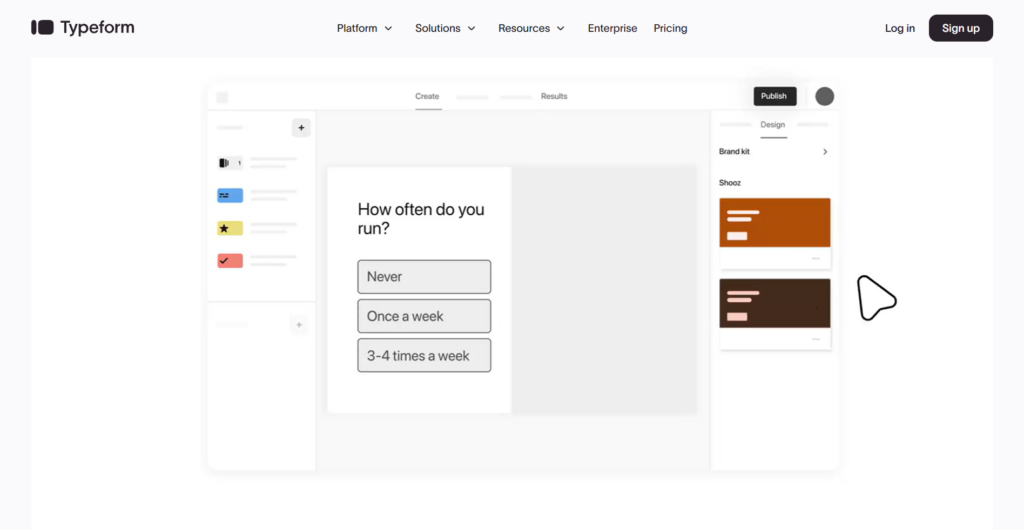
These work because they focus on behaviour and context rather than abstract preferences. Use free tools like Google Forms or Typeform, and offer a small incentive (free resource, entry into a draw) to boost response rates. Aim for 50 to 100 responses to identify meaningful patterns.
Creating Actionable Audience Personas
Transform your research data into actionable audience personas that guide content decisions. Create 2 to 4 persona profiles based on patterns you’ve identified. For each persona, document:
- Their primary goal related to your content
- Their biggest challenge
- Their preferred content format (based on your analytics)
- Their typical questions (from social listening and surveys)
- Their content consumption context (mobile during commute, desktop at work, evening browsing)
Name each persona and refer to them when planning content: “Would this video format work for Mobile Maria who watches during her commute?” This framework turns abstract data into concrete decision-making tools.
A/B Testing
Run systematic A/B tests on content formats to validate your assumptions with real performance data. Choose one variable to test at a time:
- Format (video vs. article)
- Length (short-form vs. long-form)
- Style (casual vs. professional)
- Structure (listicle vs. narrative)
Create two versions of content on the same topic and promote them equally to similar audience segments. For example, turn your best-performing article into a 3-minute video and compare engagement rates, time spent, and conversion rates over two weeks.
Use native platform A/B testing tools (Facebook’s split testing, YouTube’s thumbnail tests) or simple manual tracking. Document your results in a testing log: what you tested, the results, and your takeaway. Run at least one test monthly to continuously refine your content strategy based on evidence rather than assumptions.
Monthly Audience Research Routine
Implement a monthly audience research routine to stay connected with evolving preferences:
- Week 1: Review analytics from the previous month, identifying your top 5 performing pieces and bottom 5, looking for pattern differences
- Week 2: Spend 30 minutes on social listening, updating your running list of audience questions and pain points
- Week 3: Engage directly with your audience through a poll, survey question, or comment thread asking for specific feedback
- Week 4: Analyze one competitor’s content performance and audience engagement style
This systematic approach takes roughly 2 to 3 hours monthly but ensures your content strategy stays grounded in actual audience behaviour rather than guesswork. Create a simple checklist and calendar reminder to make this routine sustainable throughout 2026 and beyond.
What’s the difference between trending content and evergreen content?
Trending content captures immediate attention around current events or popular topics, while evergreen content provides lasting value that remains relevant over time. Both serve important but different purposes in a comprehensive content strategy.
Trending Content Characteristics
Trending content rides the wave of current interest. Examples include:
- News reactions
- Seasonal topics
- Viral challenges
- Industry developments
It can drive significant short-term traffic and help you join relevant conversations, but its impact typically fades quickly. The key is timing and relevance to your audience’s interests.
Evergreen Content Characteristics
Evergreen content addresses fundamental questions, provides timeless advice, or explains concepts that don’t change frequently. This content continues attracting traffic months or years after publication, making it valuable for long-term search visibility and authority building.
The most effective content strategies balance both approaches.
Use trending content to capture immediate attention and show you’re current with your industry, then guide that audience toward evergreen content that demonstrates your deeper expertise and provides lasting value.
When planning content creation at scale, evergreen pieces often provide better return on investment because they continue working long after publication. However, trending content can help you build audience and establish relevance in the moment.
How do you maintain content quality while creating at scale?
Systematic workflows and strategic repurposing allow you to increase content output without sacrificing quality. The key is building repeatable processes that leverage your best work across multiple formats while maintaining your authentic voice and brand consistency.
Content Batching
Content batching transforms your production efficiency by grouping similar tasks together. Instead of creating one piece from start to finish, dedicate specific time blocks to research, writing, editing, or design across multiple pieces.
This reduces context-switching and allows you to enter a focused flow state. For example, research and outline five articles in one session, write them in another, then batch your editing and formatting. This approach can cut production time by 30 to 40% while maintaining quality because you’re working within consistent mental frameworks.
Repurposing Frameworks
Repurposing frameworks multiply your content’s value without starting from scratch each time. A comprehensive article can become:
- A video script
- Podcast episode
- Infographic
- Social media carousel
- Email series
- Multiple short-form posts
The key is planning for repurposing from the beginning. Structure your core content with modular sections that can stand alone. A single well-researched pillar piece can generate 15 to 20 derivative content pieces across platforms when you have a systematic repurposing workflow.
Strategic AI Tool Usage
AI tools can accelerate specific production stages when used strategically while preserving authenticity. Use AI for:
- Initial research compilation
- Outline generation
- First-draft creation
- Reformatting content for different platforms
- Generating variations of social posts
- Creating meta descriptions
Always apply human editing for voice, accuracy, and genuine insight. Your unique perspective, experience-based insights, and brand voice must come from human input. The most effective approach treats AI as a production assistant rather than a replacement for creative thinking.
Content Templates and Systems
Content templates and systems create consistency while speeding production. Develop templates for your most common content types that include:
- Brand voice guidelines
- Key messaging points
- Quality checkpoints
- Prompts for storytelling elements
- Calls-to-action
- SEO components
These templates shouldn’t constrain creativity but rather provide a framework that ensures you cover essential elements every time.
Team Collaboration Workflows
Team collaboration workflows become essential as you scale beyond individual production. Establish clear roles, approval stages, and communication protocols using project management tools.
A typical scaled workflow includes:
- Strategy/planning (week 1)
- Content creation (week 2)
- Review and revision (week 3)
- Publication/promotion (week 4)
This staggered timeline allows multiple pieces to move through different stages simultaneously. Build in quality control checkpoints at strategic moments (after outline approval, after first draft, and before final publication) to catch issues early without creating bottlenecks.
Quality Control Checkpoints
Quality control checkpoints ensure consistency across high-volume production. Create a content quality checklist covering:
- Brand voice alignment
- Factual accuracy
- SEO optimization
- Readability scores
- Value delivery
For scaled operations, consider implementing a tiered review system where routine content gets streamlined approval while strategic or sensitive pieces receive more thorough review. Track performance metrics for content created at scale to identify which efficiency measures maintain quality and which compromise results, then adjust your processes accordingly.
Why do some content pieces go viral while others don’t?
Viral content combines strong emotional triggers with perfect timing and easy shareability. However, virality isn’t entirely predictable; many factors beyond content quality influence whether something spreads widely.
Emotional Intensity
Emotional intensity drives sharing behaviour. Content that makes people feel strongly gets shared because people want to extend that emotional experience to others. Common emotional triggers include:
- Humour
- Outrage
- Inspiration
- Surprise
The emotion needs to be immediate and strong enough to overcome the friction of sharing.
Timing and Context
Timing plays a crucial role that’s often overlooked. The same content piece might perform completely differently depending on when it’s published, what else is happening in the news, or what conversations are already active in your community.
Platform Algorithms
Platform algorithms significantly influence reach. Each platform has different factors that determine visibility:
- Engagement velocity
- Content format preferences
- Relevance signals
Understanding these factors helps, but they change frequently and aren’t entirely transparent.
Shareability Factors
Shareability factors include:
- Clear value proposition (why should someone share this?)
- Easy-to-understand concepts
- Content that makes the sharer look good to their network
People share content that reflects well on them or provides value to their connections.
Rather than chasing virality, focus on creating consistently valuable content that serves your audience well. Viral moments are bonuses, but sustainable success comes from regular engagement with content that genuinely helps people.
What should you do when your content isn’t getting engagement?
When content underperforms, systematic diagnosis reveals fixable issues more effectively than abandoning your strategy entirely. Most engagement problems stem from a handful of identifiable factors: misalignment with audience needs, poor platform fit, weak opening hooks, unclear value propositions, or timing issues.
Diagnostic Checklist
Start with a diagnostic checklist for each underperforming piece. Ask:
- Is this reaching the right audience on the right platform?
- Does the headline or opening create immediate curiosity or promise clear value?
- Is the format appropriate for the topic and platform expectations?
- Does it address a genuine problem or interest your audience has right now?
- Is the call-to-action clear and compelling?
Often, content fails not because the core idea is wrong, but because one of these execution elements misses the mark.
Content Auditing
Content auditing reveals patterns across your underperforming pieces. Review your analytics for the past 3 to 6 months and categorize content by performance level. Look for commonalities among low performers:
- Are certain topics consistently underperforming?
- Do specific formats struggle?
- Is there a timing pattern?
This pattern recognition helps you identify whether you have a systematic issue (wrong audience targeting, platform mismatch) or isolated problems (specific topics that don’t resonate). Pay special attention to pieces that started strong but declined quickly versus those that never gained traction; these indicate different underlying issues.
Content Refresh and Optimization
Content refresh and optimization strategies can revive evergreen pieces without starting from scratch:
- Update statistics and examples to reflect 2026 realities
- Strengthen your opening hook based on what you now know resonates with your audience
- Add new sections addressing questions that have emerged since publication
- Improve visual elements or formatting for better readability
- Optimize for search intent that may have evolved
Sometimes a piece just needs better distribution rather than content changes. Repurpose it into different formats, share it in new communities, or feature it in your email newsletter if it hasn’t been seen there.
When to Double Down vs. When to Pivot
Knowing when to double down versus when to pivot requires honest assessment of core versus execution problems.
Double down when:
- Your topic is validated by audience questions or competitor success
- Engagement metrics show people consume the content but don’t share it (distribution problem, not content problem)
- Analytics reveal traffic from the wrong audience segment (targeting issue, not content issue)
Pivot completely when:
- Multiple attempts at the same topic consistently underperform
- Audience feedback explicitly requests different content
- Your best-performing content points in a clearly different direction
The key distinction is whether you have a content problem or an execution problem.
Reviving Older Content
Reviving and redistributing older content effectively extends its value without constant creation. Identify “hidden gems” (pieces with strong engagement metrics but low visibility) and give them fresh distribution through:
- New channels
- Updated social posts with different angles
- Inclusion in content roundups
Create content clusters by linking related older pieces to new content, improving both SEO and user experience. Transform high-value older content into different formats: turn comprehensive articles into video scripts, infographics, or email courses. This approach is particularly valuable when you need to generate content at scale; strategic repurposing multiplies your output without multiplying your effort.
Common Content Mistakes by Category
Common content mistakes vary by category and require specific fixes:
| Content Category | Common Mistake | How to Fix It |
|---|---|---|
| B2B Content | Too product-focused rather than problem-focused | Lead with customer challenges and position your solution as one approach among several, building trust before pushing sales |
| B2C Content | Lacks emotional connection or social proof | Incorporate customer stories, user-generated content, and clear lifestyle benefits |
| Educational Content | Drowns in complexity without clear structure | Break information into progressive steps, use more examples and analogies, and provide quick wins early |
| Product-Focused Content | Describes features instead of outcomes | Reframe by starting with the transformation or result, then explain how features enable that outcome |
For each category, test one variable at a time so you can identify what actually drives improvement rather than guessing.
How do content preferences vary across different age groups?
Different generations have distinct preferences for content formats, communication styles, and platform usage, though individual preferences within age groups vary significantly. Understanding these patterns helps you tailor your approach without stereotyping.
Younger Audiences (Gen Z and Younger Millennials)
Younger audiences tend to prefer:
- Short-form, visual content
- Authentic, conversational tones
- Fast-paced information delivery
- Transparent communication
They’re comfortable with multitasking while consuming content and are quick to detect and reject overly polished or sales-focused messaging.
Older Millennials and Gen X
Older millennials and Gen X often appreciate:
- More comprehensive content that provides context and detailed explanations
- Longer formats when the value is clear
- Professional but approachable communication styles
Baby Boomers and Older Generations
Baby Boomers and older generations typically prefer:
- Clear, straightforward communication with obvious value propositions
- Text-based content or longer-form video with clear structure
- Professional presentation
Platform preferences also vary by age, affecting how different groups discover and consume content. However, these patterns shift constantly as platforms evolve and different age groups adapt their usage patterns.
Rather than designing content solely around age demographics, consider the context in which people will consume your content and what they’re trying to accomplish. A busy professional might prefer different formats than the same person relaxing at home, regardless of their age.
The most successful content strategies focus on solving specific problems or serving particular needs rather than targeting age groups directly. When you create genuinely helpful content and distribute it where your audience naturally gathers, engagement follows regardless of demographic categories.
How does content performance differ across major platforms?
Each social media platform has distinct content preferences, algorithms, and audience behaviours that significantly impact performance. Understanding these platform-specific dynamics helps you optimize your content strategy and maximize engagement where your audience actually spends their time.
Facebook and Meta Platforms
Facebook and Meta platforms favour content that sparks meaningful conversations and community interaction. Key performance factors include:
- Longer-form posts (1,500 to 2,000 characters) often perform better than short updates, especially when they ask questions or encourage discussion
- Facebook Groups have become particularly valuable for building engaged communities around specific topics
- Video content gets priority in the algorithm, particularly live videos and native uploads rather than external links
- Optimal posting frequency: 3 to 5 posts per week
- Focus on content that encourages comments and shares rather than just passive likes
Instagram operates as a visual-first ecosystem where aesthetics and immediate visual impact determine success:
- Reels currently receive the highest algorithmic boost, with short-form videos (15 to 60 seconds) generating significantly more reach than static posts
- Stories work well for behind-the-scenes content and maintaining daily presence without overwhelming your main feed
- Carousel posts (multiple images in one post) generate higher engagement rates because they encourage interaction through swiping
- Optimal posting frequency: 4 to 7 times per week using a mix of formats
- Authenticity increasingly outperforms overly polished content, especially among younger audiences
LinkedIn rewards professional thought leadership and industry insights over promotional content:
- Longer-form articles and posts that provide genuine professional value consistently outperform short updates
- The platform’s algorithm prioritizes content that keeps users on LinkedIn, so native articles and documents perform better than external links
- Personal posts from individual accounts typically generate more engagement than company page posts, making employee advocacy crucial
- Optimal posting frequency: 2 to 3 times per week during business hours
- Focus on insights, lessons learned, industry analysis, and professional development content that demonstrates expertise without overt selling
TikTok and YouTube Shorts
TikTok and YouTube Shorts dominate the short-form video landscape with different strengths:
TikTok:
- Algorithm gives new creators exceptional reach potential, prioritizing content quality and engagement over follower count
- Videos between 21 to 34 seconds typically perform best, though the platform now supports longer content
- Trending sounds, effects, and challenges can dramatically boost visibility
YouTube Shorts:
- Benefits from integration with the broader YouTube ecosystem, making it valuable for creators building long-form audiences
Both platforms:
- Reward consistent posting (ideally daily or 4 to 5 times weekly)
- Favour authentic, entertaining content over polished production
- Require hooking viewers in the first 2 to 3 seconds and maintaining fast pacing throughout
Choosing the Right Platforms
When choosing platforms, consider where your specific audience naturally gathers and what they’re trying to accomplish there. B2B audiences actively seeking professional development gravitate toward LinkedIn, while younger consumers discovering products through entertainment prefer TikTok and Instagram.
Rather than spreading yourself thin across all platforms, focus on 2 to 3 where you can consistently deliver content that matches both platform culture and your audience needs. Test different formats on each platform, analyze your specific performance data, and double down on what works for your unique audience rather than following generic best practices.