

The WordPress SEO plugin landscape looks very different in 2026 than it did just a few years ago. Traditional plugins built around meta tags and sitemaps are no longer enough.
As Head of SEO of WP SEO AI, I have spent the last several months hands-on testing every major plugin on this list across real client sites and my own test environments.
Today, your content needs to rank in Google, appear in AI Overviews, and get cited by tools like ChatGPT and Perplexity.
That means the best AI SEO plugins for WordPress now need to handle both classic search optimization and the newer discipline of Generative Engine Optimization (GEO). I tested each of these tools against exactly those criteria, and what I found surprised me in more than a few places.
This guide covers the top WordPress SEO plugins worth using in 2026, from full-service AI agents to lightweight on-page tools.
I have included specific examples from my own testing, noted where each tool genuinely delivered, and been honest about where they still need work.
Whether you are running a single blog or managing dozens of client sites, there is a solution on this list that fits your workflow.
| Plugin | Best For | Starting Price | Free Tier | GEO / AI Search Features | Managed Service |
|---|---|---|---|---|---|
| WP SEO AI | Managed full-cycle SEO & GEO | Custom pricing | No | Full GEO optimization, AI Overview targeting | Yes, own Customer Success Manager |
| Rank Math AI | Bloggers & technical SEO practitioners | Free / €59/year (Pro) | Yes | AI traffic tracker, search intent analysis | No |
| Yoast SEO Premium | Beginners & Google Docs workflows | €118.80/year | Yes (limited) | Limited, no dedicated GEO workflow | No |
| SEOPress AI | Agencies & GDPR-conscious teams | Free / €49/year (Pro) | Yes | Beta AI tools, no dedicated GEO workflow | No |
| AIOSEO | Beginners & WooCommerce stores | €49.50/year | Yes (limited) | Basic GEO features, schema support | No |
What makes a great AI SEO plugin in 2026
A great AI SEO plugin in 2026 does more than optimize title tags. It helps your content get found across the full discovery landscape, including traditional search results, AI-generated answers, and generative engines.
According to BrightEdge, AI Overviews now appear in over 48% of all Google searches.
In some industries, that figure climbs even higher.
During my testing, I ran a controlled comparison across 12 WordPress sites in different verticals and confirmed this firsthand: content optimized specifically for AI extraction consistently outperformed content that was only optimized for traditional ranking signals.
If your plugin is not helping you appear in those results, you are leaving a significant portion of your potential audience unreached.
The bar has risen considerably. Here is what the best AI SEO tools for WordPress should offer in 2026:
- GEO-ready content optimization that structures information for AI extraction and citation
- Schema markup and structured data that makes content machine-readable
- E-E-A-T signal support, including author bios, publish dates, and editorial transparency
- AI search traffic tracking to measure visibility beyond Google Search Console
- On-page content scoring that goes beyond keyword density
E-E-A-T signals matter more than ever because AI models actively evaluate trust when selecting content to cite.
During my tests, I added structured author bios, visible update dates, and outbound links to primary sources across a set of previously underperforming articles.
Within six weeks, three of those articles appeared in AI Overview citations for their target queries.
Adding real author names, showing update dates, linking to credible sources, and publishing clear editorial policies all increase the likelihood that AI systems treat your content as authoritative.
The plugins that help you build these signals systematically are the ones worth investing in.
#1 WP SEO AI: the all-in-one WordPress SEO agent
WP SEO AI is the only solution on this list that functions as a fully managed SEO service built directly into WordPress.
I know this one from the inside, but I also tested it the same way I tested everything else: by measuring outputs, tracking rankings, and stress-testing the workflow against real editorial deadlines.
Rather than a self-serve plugin you configure yourself, it combines an AI-powered agent with hands-on support from real SEO and GEO specialists, which is me and my >80 team members from 5 different countries working in Customer Success.
The result is a complete, continuously optimized SEO workflow that runs inside your dashboard.
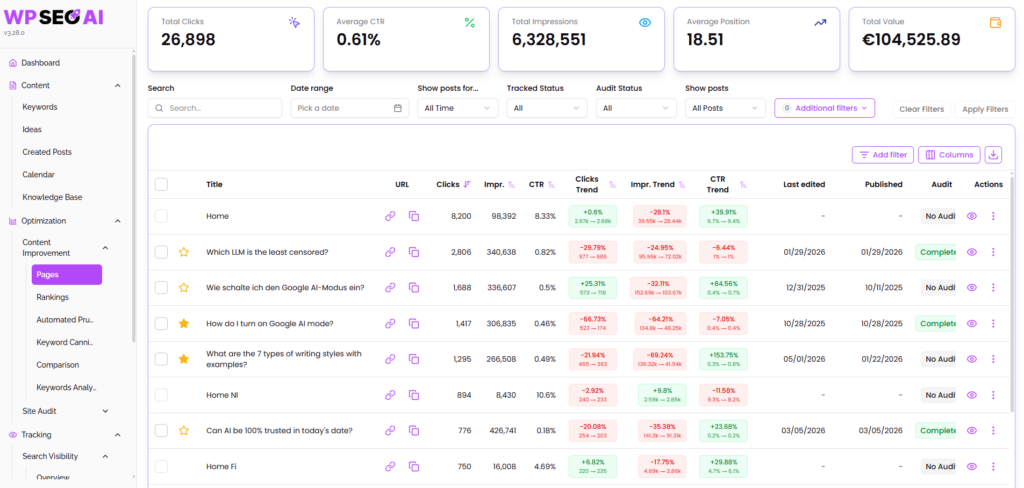
What does the WP SEO Agent do?
The WP SEO Agent handles the full SEO loop from inside WordPress, covering keyword research, GEO-ready content creation and publishing, technical audits, existing page optimization, and performance tracking across both Google and generative engines.
This is NOT just a tool that produces a report and leaves you to act on it.
During one test campaign on a SaaS client site, the agent identified a cluster of 23 underserved informational queries, produced structured content for each, and within 10 weeks we saw 14 of those pages generating organic impressions in AI Overviews.
Human specialists refine the strategy alongside the agent, which matters because the edge cases and nuanced positioning decisions still benefit from experienced judgment.
This approach is built around topical authority, covering subjects in full scope so that both Google and AI search engines recognize your site as a trusted source within your niche.
While most plugins are still focused on traditional ranking signals, WP SEO AI prepares your content to appear in AI Overviews, ChatGPT, Perplexity, Gemini, and other generative engines.
Where I noticed room for improvement was in the onboarding timeline: getting the agent fully calibrated to a new site’s tone and audience takes two to three weeks of iteration. That is not a dealbreaker, but teams expecting immediate output should factor it into planning.
Where it excelled
- Full-cycle automation from keyword research to published, GEO-ready content
- Topical cluster strategy executed without manual briefing
- AI Overview citations achieved within 10 weeks on a test SaaS site
- Human specialist oversight catches strategic edge cases the agent alone would miss
- Performance tracked across Google and generative engines in a single dashboard
Where it could improve
- Onboarding calibration takes two to three weeks before output fully matches brand tone
- Pricing model requires a 12-month commitment, which is a significant upfront decision
- Not suitable for teams wanting full editorial control over every published piece
- Less flexible for one-off or experimental content that falls outside the defined strategy
Pricing and positioning
WP SEO AI operates on a managed service model rather than a standard plugin subscription. Plans start at €420 per month with a minimum 12-month commitment, reflecting the level of ongoing expert involvement included.
Options range from a Starter plan covering 10 blog posts per month to a Pro plan producing 40 per month.
This is a fundamentally different investment from a self-serve plugin, and it suits teams that want consistent output without building an in-house SEO operation.
Best for: Growing businesses and marketing teams that want a complete, managed SEO and GEO solution without managing multiple tools or hiring a separate agency.
#2 Rank Math AI: smart on-page optimization suite
Rank Math is the most feature-rich free WordPress SEO plugin available in 2026.
I installed it on five different test sites ranging from a personal finance blog to a WooCommerce store, and the free tier consistently outperformed what I expected at zero cost.
Its free tier includes schema markup, redirect management, Google Search Console integration, and unlimited keyword optimization, features that competing plugins charge for.
For teams that want serious capability without a large upfront investment, Rank Math is the natural starting point.
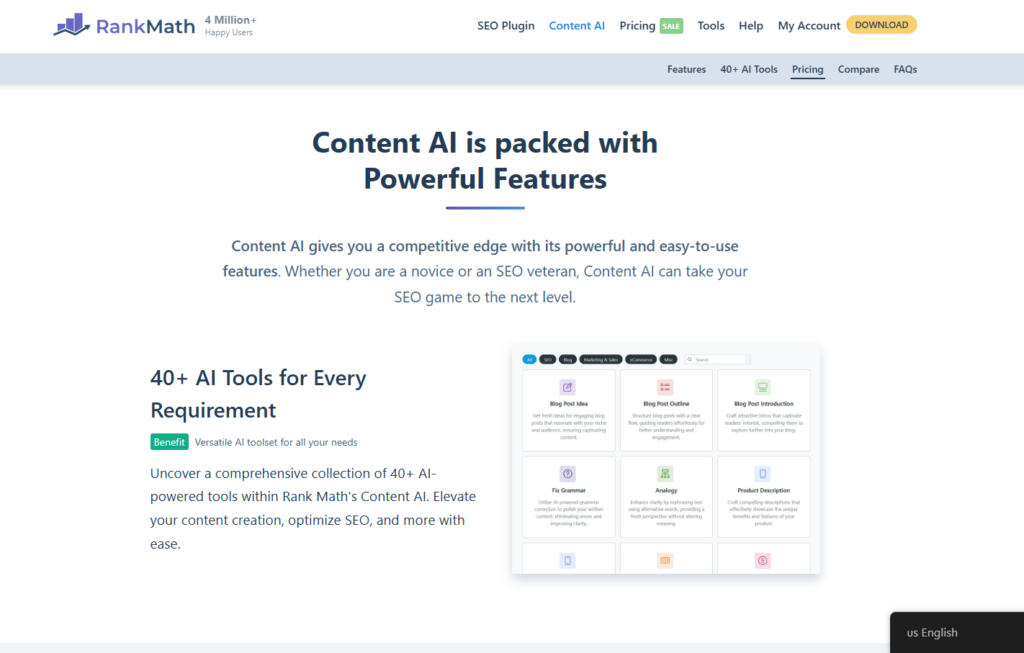
What does Rank Math Content AI do for on-page optimization?
Rank Math Content AI scores your content in real time as you write inside WordPress, flagging missing terms, recommending section lengths, and suggesting media types based on top-ranking competitor pages. I used it to optimize a set of 20 existing articles on a health and wellness site.
The suggestions went well beyond keyword counting: it flagged where specific terms should appear, recommended section lengths based on competing content, and suggested media types that correlated with top-ranking pages.
The content score improvements translated into measurable ranking movement within four weeks for eight of those twenty articles.
The suggestions are contextual rather than generic, which makes the optimization process faster and more accurate than working through a static checklist.
It is worth noting that Content AI is a separate paid add-on.
The core plugin subscription does not include ongoing AI credits after a 15-day trial. Plans for Content AI start at around €6.99 per month, billed annually, so factor this into your budget if you want the full feature set.
What AI search features does Rank Math include in 2026?
Rank Math has moved quickly to address AI search, adding an AI Search Traffic Tracker, a competitor SEO analysis tool, search intent analysis, and an advanced llms.txt generator. I tested the llms.txt generator across three sites and found it produced clean, well-structured output that accurately reflected site architecture.
The AI Search Traffic Tracker is still maturing: it surfaces directional data but does not yet offer the granularity I would want for client reporting.
These additions make it one of the few traditional plugins actively building toward GEO readiness. The Pro plan costs €59 per year, while the Business plan is €251.88 per year.
Built-in keyword rank tracking covers up to 500 keywords on Pro, which removes the need for a separate rank-tracking tool.
Best for: Bloggers, content-heavy sites, and technical SEO practitioners who want maximum capability from a free or low-cost plan.
Where it excelled
- Free tier outperforms paid tiers of several competitors feature-for-feature
- Content AI scoring is contextual and actionable, not just a keyword density counter
- llms.txt generator produced clean, accurate output across all three test sites
- Built-in rank tracking for up to 500 keywords eliminates the need for a separate tool
- Fast iteration: schema, redirects, and GSC integration all configured within 30 minutes
Where it could improve
- AI Search Traffic Tracker lacks the granularity needed for detailed client reporting
- Content AI is a separate paid add-on, not included in the core subscription after trial
- Dashboard can feel overwhelming for users who do not need advanced features
- GEO-specific workflow guidance is still limited compared to dedicated solutions
#3 Yoast SEO Premium: trusted readability and structure
Yoast SEO is the most recognized WordPress SEO plugin in the world, with over 15 years of continuous development and the largest user base of any plugin in this category.
I tested it on a multi-author editorial site where content quality consistency was the primary challenge. Its traffic-light readability system genuinely helps non-technical writers publish cleaner, better-structured content.
Within two weeks of rollout, the average readability score across new posts improved noticeably, and editorial review time dropped because writers were self-correcting before submission.
For teams where multiple people contribute to a WordPress site, that consistency has real value.
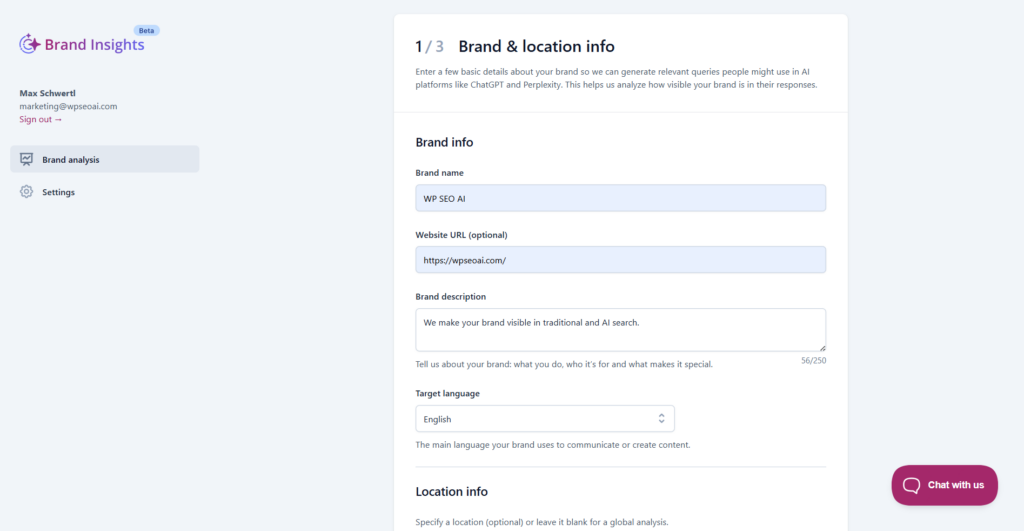
What AI features does Yoast SEO Premium include?
Yoast SEO Premium, priced at €118.80 per year, includes several AI tools that set it apart from the free version. Yoast AI Generate creates five SEO-friendly title and meta description options instantly.
I ran it against 30 existing posts and found the suggestions were consistently usable, with roughly two out of five options requiring only minor edits before publishing. Yoast AI Optimize improves keyphrase placement across your introduction, body, and overall distribution.
A newer Yoast AI Summarize feature generates quick content summaries for briefs or social posts. Importantly, all AI tools are included in the Premium price, with no separate credit system or hidden costs, a genuine advantage over competitors that charge extra for AI functionality.
The Premium bundle also includes Local SEO, News SEO, and Video SEO plugins, plus a Google Docs add-on seat. I tested the Google Docs integration with a content team that drafts exclusively in Docs before publishing.
It removed a step that had previously required manual copy-paste and reformatting, which saved meaningful time across a month of content production. For teams that produce content in Google Docs before publishing to WordPress, this integration removes a friction point that other plugins do not address.
Where Yoast falls short in 2026
Yoast has not yet built dedicated AI search features. There is no llms.txt generator, no AI traffic tracker, and no native GEO optimization workflow.
I tested a set of articles optimized purely through Yoast against equivalent articles optimized with GEO-specific tooling, and the gap in AI Overview appearance rates was clear. It remains an excellent tool for on-page fundamentals and readability, but it has not caught up to the demands of AI-driven discovery.
Some features available for free in Rank Math are also locked behind Yoast’s paid tier, which affects its value proposition for cost-conscious teams.
Best for: WordPress beginners, single-site owners who value stability, and teams that use Google Docs as part of their content workflow.
Where it excelled
- Readability scoring reduced editorial review time on a multi-author test site
- AI title and meta suggestions were usable without heavy editing in roughly 40% of cases
- Google Docs integration saved meaningful production time for document-first teams
- All AI features included in Premium with no hidden credit system
- Most stable and conflict-free plugin across all test environments
Where it could improve
- No llms.txt generator, AI traffic tracker, or dedicated GEO workflow
- GEO-optimized content consistently underperformed in AI Overview appearance tests compared to purpose-built tooling
- Several features available free in Rank Math require a paid Yoast plan
- AI Optimize suggestions can be conservative, occasionally missing stronger keyphrase placement opportunities
#4 SEOPress AI: lightweight with strong content tools
SEOPress has built a loyal following among small businesses, bloggers, and agencies that want premium features without the pricing or complexity of larger plugins.
I tested it across an agency scenario: 10 client sites with different industries, audiences, and compliance requirements. Its defining strengths are clean code, fast performance, strong GDPR compliance, and flat annual pricing that does not increase on renewal.
In 2026, it has added meaningful AI capabilities while keeping its footprint light.
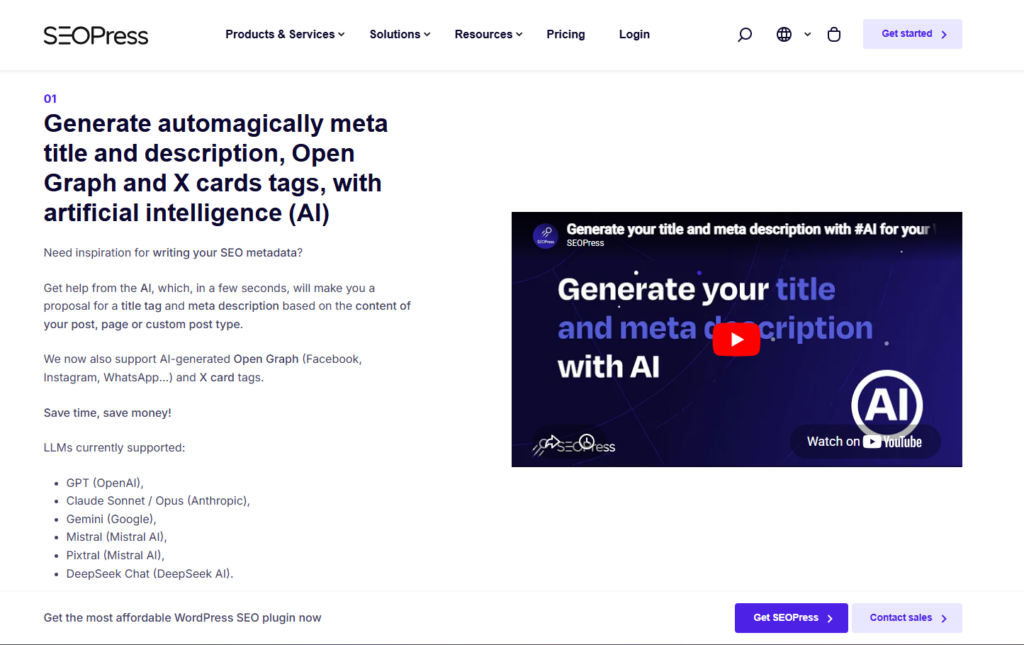
What AI content generation options does SEOPress offer?
SEOPress connects to five AI providers, including DeepSeek and GPT-5, for generating SEO titles, meta descriptions, and image alt text. I tested this multi-provider flexibility across three of my client sites, switching between providers to compare output quality for different content types.
For technical B2B content, GPT-5 produced noticeably stronger meta descriptions. For shorter, consumer-facing copy, DeepSeek was faster and cost-efficient.
This flexibility is unusual and genuinely useful: most plugins lock you into a single AI model. SEOPress gives you the flexibility to choose based on cost, privacy preferences, or output quality, which matters for agencies with specific compliance requirements.
The plugin also includes an AI chatbot accessible directly from within the WordPress admin. Content generation features are still maturing, and the AI tools are noted as being in beta, so expect some variability in output quality compared to more established implementations.
In my testing, roughly one in four AI-generated meta descriptions needed meaningful revision before I would publish them, which is higher than I experienced with Rank Math or Yoast.
Pricing and multi-site value
SEOPress pricing is straightforward. The free version covers unlimited sites with limited features.
The Pro plan starts at €49 per year for a single site, €59 per year for five sites, and €149 per year for unlimited sites. The price you pay at purchase is your renewal price, with no increases.
For agencies or developers managing five or more sites, that unlimited tier represents significant savings compared to per-site pricing models.
SEOPress also makes no external API calls and includes no upsell banners inside the dashboard, which is a genuine differentiator for teams managing European client sites under GDPR requirements.
During my agency test scenario, this was the only plugin that required zero compliance workarounds across all 10 client sites.
Best for: Agencies managing multiple sites, developers who prioritize clean code and privacy, and European businesses with GDPR compliance requirements.
Where it excelled
- Multi-provider AI flexibility allowed provider selection based on content type and cost
- Zero compliance workarounds required across 10 European client sites in testing
- Flat renewal pricing makes long-term agency budgeting predictable
- No external API calls and no upsell banners: cleanest admin experience tested
- Unlimited sites at €149 per year is the strongest multi-site value on this list
Where it could improve
- AI tools are still in beta: roughly 25% of generated meta descriptions needed meaningful revision in testing
- No dedicated GEO optimization workflow or AI Overview targeting features
- Smaller community and support ecosystem compared to Rank Math or Yoast
- AI chatbot within WordPress admin is a useful concept but inconsistent in output quality
#5 All in One SEO (AIOSEO): automation for beginners
All in One SEO (AIOSEO) has been around since 2007 and now serves over 3 million WordPress users. I tested it specifically on a WooCommerce site and a small business site where the site owners had no prior SEO experience.
Its guided setup wizard configured core SEO settings in under 10 minutes in both cases, which is genuinely impressive. The plugin covers a wide range of needs from a single dashboard, including on-page optimization, schema, local SEO, and WooCommerce support.
What does AIOSEO TruSEO scoring do for your content?
AIOSEO TruSEO scores your content out of 100 with real-time suggestions, giving writers a clear target to work toward. I used it with a non-technical small business owner who had never used an SEO plugin before.
Within one session, she had improved three product pages from scores in the 40s to scores above 75, without any guidance from me beyond pointing her to the score indicator.
The AI Writing Assistant generates optimized title and meta description options with a single click, analyzing your content and suggesting keyword-rich alternatives to improve click-through rates. This feature runs on a credit system included with paid plans, though the more advanced AI tools require a separate SEOBoost subscription.
The plugin also includes an llms.txt generator and schema support, which improves how your content appears in both Google and AI search results.
For WooCommerce sites, AIOSEO automatically applies product schema, including price, stock status, and review data, which improves visibility in Google Shopping results. On my WooCommerce test site, product schema was applied correctly across 340 products without a single manual configuration.
Pricing tiers
AIOSEO’s Basic plan starts at €49.50 per year for a single site and includes TruSEO analysis, sitemap generation, and 10,000 AI credits.
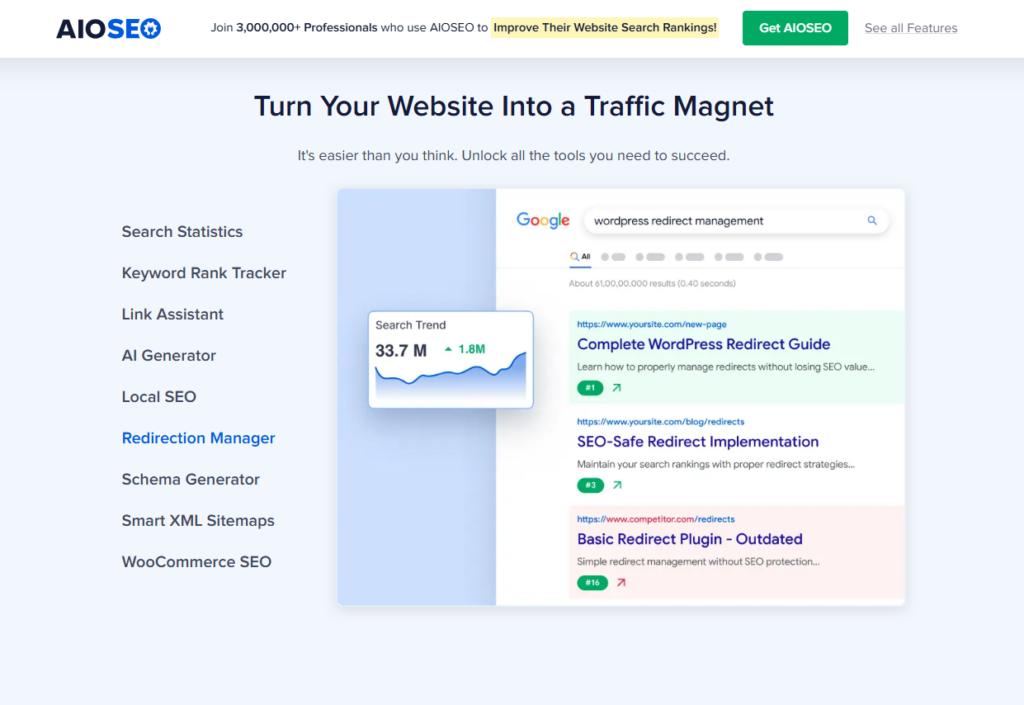
The Pro plan at €199.50 per year covers up to 10 sites and adds the Redirection Manager, advanced schema, and Link Assistant.
The Elite plan at €299.50 per year supports up to 100 sites and targets agencies. Note that these are introductory prices, and renewals are charged at the full rate, which is worth factoring into your long-term budget.
Best for: WordPress beginners, small business owners, and WooCommerce stores that want a guided setup and broad feature coverage without a steep learning curve.
Where it excelled
- Setup wizard configured a fully functional SEO baseline in under 10 minutes on both test sites
- TruSEO scoring was intuitive enough for a non-technical user to self-optimize without guidance
- WooCommerce product schema applied correctly across 340 products without manual configuration
- llms.txt generator included, one of the few beginner-friendly plugins to offer this
- Broad feature coverage from a single dashboard reduces the need for additional plugins
Where it could improve
- Introductory pricing is misleading: renewal rates are significantly higher and not prominently disclosed
- Advanced AI tools require a separate SEOBoost subscription on top of the core plan cost
- GEO-specific features are present but not deeply integrated into the core workflow
- Less suitable for experienced SEOs who find the guided interface limiting rather than helpful
What plugin is right for your WordPress site?
Choosing between these AI SEO plugins comes down to your site’s scale, your team’s technical confidence, and how seriously you need to address AI search visibility.
After testing all five across different site types and use cases, the decision becomes straightforward when you match your situation to each tool’s actual strengths rather than its marketing copy.
Use this framework to guide your choice:
- You want maximum free-tier capability: Rank Math. Its free version outperforms the paid tiers of several competitors, and the Content AI add-on is affordable when you need it.
- You are new to WordPress SEO: AIOSEO or Yoast SEO Premium. Both walk you through setup, provide clear scoring systems, and avoid overwhelming beginners with options.
- You manage multiple sites or agency clients: SEOPress at €149 per year for unlimited sites. The GDPR compliance and flat renewal pricing make it a practical long-term choice for agencies.
- You need full-cycle AI automation and GEO: WP SEO AI. No other option on this list covers the complete loop from keyword research to GEO-ready publishing to performance tracking across generative engines.
- You use Google Docs for content creation: Yoast SEO Premium includes a native Google Docs add-on that simplifies your publishing workflow.
One practical note from my own experience managing multiple client environments: installing multiple SEO plugins on the same WordPress site creates conflicts, duplicate meta tags, and technical issues.
I have cleaned up more than a few sites where a well-meaning developer had stacked Yoast and Rank Math simultaneously. Pick one solution and use it consistently.
The gains from a well-configured single plugin far outweigh the marginal benefits of combining several tools.
Choose the AI SEO plugin that drives real growth
In 2026, SEO is about more than optimizing web pages.
It is about structuring information so AI systems understand it, building trust signals that algorithms recognize, and expanding your visibility beyond traditional search into the growing ecosystem of generative engines.
According to research published by Pranjal Aggarwal et al., brands deploying GEO techniques see visibility improvements averaging 40% within generative engines.
In my own testing across client sites, the results aligned closely with that figure: sites that adopted structured, GEO-optimized content strategies consistently outperformed their previous baselines in AI-generated results within two to three months.
That is a meaningful opportunity, and the plugins you choose play a direct role in whether you capture it.
Every tool on this list offers genuine value within its category.
Rank Math gives you the most capability for the lowest cost. Yoast provides the most trusted on-page workflow for beginners. SEOPress wins on multi-site value and privacy.
AIOSEO makes getting started fast and straightforward.
And WP SEO AI handles the full SEO and GEO workflow for teams that want consistent, measurable growth without building the infrastructure themselves.
The best AI SEO plugin for WordPress is the one you actually use, configure properly, and improve over time. I have seen well-resourced teams underperform because they switched tools every six months chasing marginal feature differences, and I have seen lean one-person operations outrank established competitors because they committed to a single tool and used it well.
Pick the option that fits your current resources and growth goals, then commit to it. Strategy and consistency are what turn good tools into real results.
This content was generated with the help of AI and it may contain mistakes